







Like any strong story, romance needs conflict. Without conflict, romantic stories can be dully predictable. After all, the vast majority of romances end with the characters together. Readers are confident that will happen. So, it’s the journey to that ending that must be interesting. And conflict is the thing that stirs the pot and gives the reader something juicy to enjoy.
Characters in romance novels often come with their own problems to mess up the smooth course of the romance. One character may have a “plan,” and no intention of a romantic entanglement messing with the plan. The dogged adherence to the plan would result in hitches to the path of romance. One character may have reason to distrust people of the main character’s “type” (good-looking, popular, financially well off, ambitious, etc.) and that distrust must be overcome for the romance to work. Loyalty or concern for someone else may be standing in the way of one of the characters accepting this new relationship. Whatever the problem that characters come into the story with, these problems will clash with the smooth sailing of the new romance.
For either the drama of conflict or the spark of romance to happen, contact needs to occur. In other words, the two romantic leads need to be pushed into contact with one another whether they like it or not. Now the situation that forces them together can be short-term or long-term.
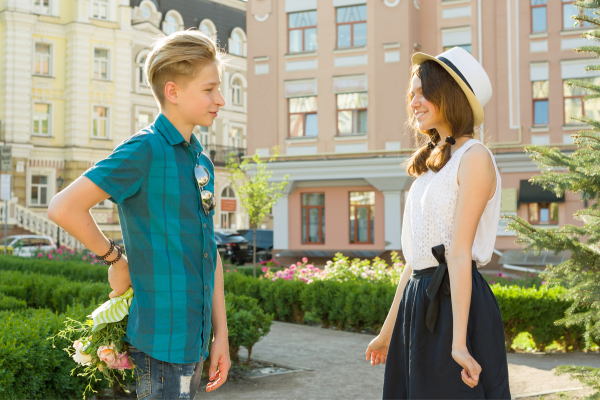 The characters may be assigned a group project and can’t switch partners. The characters may have gotten the leads in the school’s big play. The characters may be the only survivors of a shipwreck. There are infinite ways to force characters together, and that togetherness is necessary for the reader to see conflict in action. After all, in real life we generally avoid the people with whom we are in conflict unless we simply cannot get around it. Book characters are the same. When conflict occurs, they generally won’t run towards it without a good reason built into the plot.
In those moments when the characters are forced together, the reader will see both the growing romantic spark between them and the drama of conflict (which will grow out of the problems the characters bring to the plot party.) Now if your romantic element is the subplot rather than the main plot, the character may be in contact less often. In that case, the problems that occur in their relationship will likely be smaller in order to be resolved with the more limited contact. But you will need contact. If two characters are not romantic at the beginning but soul mates at the end while light years apart throughout almost all of the novel, we’re going to feel that romantic element was just slapped on. It won’t feel real.
On the character level, novels are about growth. Sure, if it’s a romance novel, the two leads end up together, but they should also grow and change in some way. This needs to be connected to the conflict (at least in part). For instance, suppose two characters are tossed into the leads in the school play. They’ve never liked one another. She considers him a snotty rich kid and she’s been bullied by rich kids far too often. He heard about a prank gone badly wrong, but in the version he heard, this girl was the instigator and reason someone got hurt. He considers her a heartless, loose cannon as a result.
 Eventually they need to end up getting over these internal roadblocks to their relationship. He is likely to learn that the version of the tale he’d heard wasn’t true, but his change toward trusting the main character should begin well before that and grow out of their time together in the play. Maybe he sees how much she’s willing to help when she sees a need. Equally, maybe she sees how loyal he is to his friends and the volunteering he does. Their attitudes soften and they grow as they accept that they may have been wrong. Learning to recognize when you’re wrong and correct for it is a big slice of character growth all by itself.
Both the conflict itself and the resolution of it must make sense within the design of your story. The characters should not have irrational conflict. If one lead is afraid of connecting romantically with anyone, that fear needs a reason and it needs to be something that sounds sensible. A teenager from a loving home who has had nothing but positive experiences and has only the most shallow reason to take a sudden dislike to this person won’t feel real and won’t be relatable for the reader. A character who thinks redheads are too volatile and angry based only on having seen it in a movie is going to sound stupid to the reader. So make sure the conflicts the character brings into the story are properly supported.
 Be sure also that the resolution of those conflicts is reasonable and believable. For example, suppose you have a character who works in her mom’s small bookstore. Her mother is dying, and the bookstore becomes a symbol of her love for her mother and the things they’ve shared. A rich developer decides to buy up all the shops on the block and tear them down. The main character isn’t likely to feel positively toward the rich developer, nor toward the developer’s teenage son. Resolving that conflict will be tough if you plan to end the book with the tiny bookstore torn down and the two teenagers together. If the character simply stops being upset about the destruction of her mother’s store for virtually no reason beyond her attraction for the developer’s son and his pleasant personality, a good number of readers are likely to be disgusted (and yep, this is why so many writers didn’t/couldn’t buy the love story in the movie You’ve Got Mail). The bigger the conflict, the more care you must take in resolving it believably.
Basically the rules of conflict in romantic novels aren’t all that different from the rules of conflict in any novel. Conflict is a wonderful mechanism for capturing reader interest and holding onto it throughout the novel, but it does require work on the part of the writer. All parts of a novel must work together to result in the kind of reader response (and agent response and editor response) you want most. As with most things about writing, it’s work. But the challenge can be fun and the results are so worth it.
With over 100 books in publication, Jan Fields writes both chapter books for children and mystery novels for adults. She’s also known for a variety of experiences teaching writing, from one session SCBWI events to lengthier Highlights Foundation workshops to these blog posts for the Institute of Children’s Literature. As a former ICL instructor, Jan enjoys equipping writers for success in whatever way she can.
1000 N. West Street #1200, Wilmington, DE 19801
© 2024 Direct Learning Systems, Inc. All rights reserved.
Licensure & Memberships
Recommended for college credits by the Connecticut Board for State Academic Awards
College credits obtained through Charter Oak State College
Approved as a private business and trade school in the state of Delaware

1000 N. West Street #1200, Wilmington, DE 19801


© 2024 Direct Learning Systems, Inc. All rights reserved.
1000 N. West Street #1200, Wilmington, DE 19801
© 2024 Direct Learning Systems, Inc. All rights reserved.
Licensure & Memberships
Recommended for college credits by the Connecticut Board for State Academic Awards
College credits obtained through Charter Oak State College
Approved as a private business and trade school in the state of Delaware
1000 N. West Street #1200, Wilmington, DE 19801

1000 N. West Street #1200, Wilmington, DE 19801
3 Comments