5 Ways Writers Can Prep for 2025 Goal Setting
Before we roll on to the new writing year, let’s harness our optimism for the blank slate before us and prepare for our 2025 Goal Setting just for writers.
 So, reading and writing are conjoined activities, and a question we need to ask ourselves is did we do enough reading last year? And how can we make our reading even more valuable to us as writers this year? Here’s how to build your reading list from a writerly perspective.
One of the things you want to do first is pick a journal you like. For me, a visual I enjoy being around goes a long way toward using a journal in real life. So I’ll splurge on something I like. I also prefer the journals that have dots over the ones that have lines. With dots, I can draw diagrams on the page easily or maybe sketch images that relate to the book I’m reading. For instance, I’m fascinated with maps, so books with maps, especially if they use interesting elements make me want to remember them. I prefer to pick journals with blank covers in pretty colors, then put stickers on them. Honestly, I love stickers. I’m a kid that way.
Once you’ve chosen your journal, then you need to decide what you want to record. First, you’ll put in the title of the book you’re reading as well as the name of the author, the number of pages perhaps, or number of chapters. I like to include mention of unusual items like whether the book used chapter titles, if it had a prologue, and a description of the cover image. All of this will help me remember this specific book right away when I’m flipping through my journal. Also, sometimes surprising patterns can appear that you barely noticed when you were reading the book. For example, middle grade books are skewing slightly shorter and many publishers are actively telling agents they’d like to see shorter books. And that pattern will show itself if you read a lot of new middle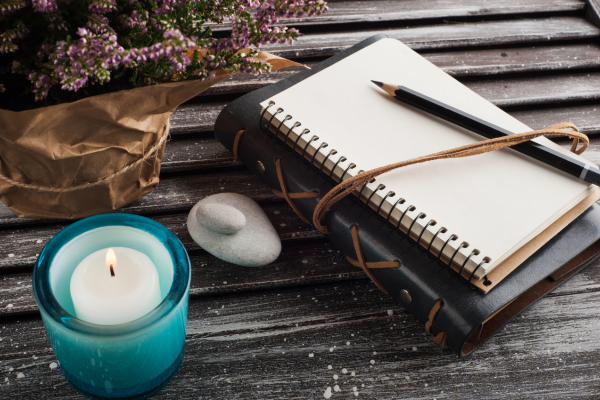 grade books and record the page numbers. I also like to make notes about illustrations or the cover if I’m struck by something about them.
While I’m reading, I carry my journal around with me and try to record at least one thing from each reading session. If I read a chapter, what struck me about it? Did it seem to move slower than the rest of the book? Or maybe faster? What characters appeared in the chapter? Did they do anything that felt purposeful? Also, I’ll jot down turns of phrase that I really liked or bits of dialogue I really liked. I’ll jot down regionalisms that made me really believe in the setting or character. If I like how the author described something, I may jot that down. I may not ever revisit these bits, but the human brain is wired to pay extra attention to something if we write it down. It gets filed under “important” in our brains and our brains will simmer and learn from these bits simply because we wrote them down.
When I finish a book, I’ll write a review in my journal, listing things I admired and things I felt missed the mark. The journal will never be shared with anyone, so feel free to be critical if you feel critical. And we learn as much from what we didn’t like as we do from what liked. It’s all valuable. I’ll also make a note if I want to visit more of this author’s work.
grade books and record the page numbers. I also like to make notes about illustrations or the cover if I’m struck by something about them.
While I’m reading, I carry my journal around with me and try to record at least one thing from each reading session. If I read a chapter, what struck me about it? Did it seem to move slower than the rest of the book? Or maybe faster? What characters appeared in the chapter? Did they do anything that felt purposeful? Also, I’ll jot down turns of phrase that I really liked or bits of dialogue I really liked. I’ll jot down regionalisms that made me really believe in the setting or character. If I like how the author described something, I may jot that down. I may not ever revisit these bits, but the human brain is wired to pay extra attention to something if we write it down. It gets filed under “important” in our brains and our brains will simmer and learn from these bits simply because we wrote them down.
When I finish a book, I’ll write a review in my journal, listing things I admired and things I felt missed the mark. The journal will never be shared with anyone, so feel free to be critical if you feel critical. And we learn as much from what we didn’t like as we do from what liked. It’s all valuable. I’ll also make a note if I want to visit more of this author’s work.
 I will also include at least one skill book every year that focuses on something connected with submissions. I may read a book that focuses on query letters or one that focuses on agents. The more I know about submissions and how different writers approach it, the more I can find my own path using the information as stepping stones to the way that works best for me. Knowing how submissions work and how the industry, in general, works will also help keep me from falling for any of the unfortunate myths that spring up around writing and submissions. It can also help avoid taking everything in the process quite so personally.
 One thing I plan to add to my reading this year is at least one classic. In 2023, I read A.A. Milne’s novel for adults, The Red House Mystery. Finding Milne’s very distinct voice in such a wildly different genre was fascinating. I enjoyed the book, though I could see its flaws, but I can also learn things from books I don’t really like at all. I was discussing Pride and Prejudice (a book I do not like, sorry Austen lovers) with my daughter recently, and while I talked about my feelings about the novel and the specific elements that annoyed me, I also found a new admiration for the author even though I still don’t like that book.
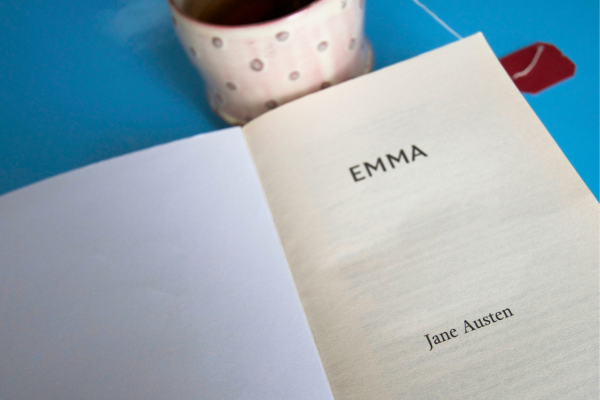
In classic literature, there is almost always something I find wearisome, but there are also the seeds of all the books we have today. That makes it worthwhile to read really old books and see the things they have to teach us. I’ve never read Austen’s Emma, so maybe I’ll do that one this year. We’ll see what it might teach me. If you’re expanding your reading options this year, may I strongly suggest you add a classic? See what the past has to teach authors in the present.
So, good luck with your reading list. Take up your reading journal and join me in a year of discovering great books, bad books, and all the many things they can show us.
One thing I plan to add to my reading this year is at least one classic. In 2023, I read A.A. Milne’s novel for adults, The Red House Mystery. Finding Milne’s very distinct voice in such a wildly different genre was fascinating. I enjoyed the book, though I could see its flaws, but I can also learn things from books I don’t really like at all. I was discussing Pride and Prejudice (a book I do not like, sorry Austen lovers) with my daughter recently, and while I talked about my feelings about the novel and the specific elements that annoyed me, I also found a new admiration for the author even though I still don’t like that book.
In classic literature, there is almost always something I find wearisome, but there are also the seeds of all the books we have today. That makes it worthwhile to read really old books and see the things they have to teach us. I’ve never read Austen’s Emma, so maybe I’ll do that one this year. We’ll see what it might teach me. If you’re expanding your reading options this year, may I strongly suggest you add a classic? See what the past has to teach authors in the present.
So, good luck with your reading list. Take up your reading journal and join me in a year of discovering great books, bad books, and all the many things they can show us.
With over 100 books in publication, Jan Fields writes both chapter books for children and mystery novels for adults. She’s also known for a variety of experiences teaching writing, from one session SCBWI events to lengthier Highlights Foundation workshops to these blog posts for the Institute of Children’s Literature. As a former ICL instructor, Jan enjoys equipping writers for success in whatever way she can.
Before we roll on to the new writing year, let’s harness our optimism for the blank slate before us and prepare for our 2025 Goal Setting just for writers.
Writers can be thin-skinned when it comes to getting feedback on their work. Let’s look at 4 ways to positively deal with constructive criticism!
Rejection is part of the territory when it comes to being a writer. Today we offer reflection for writers to help redirect your efforts after a rejection.

1000 N. West Street #1200, Wilmington, DE 19801


© 2024 Direct Learning Systems, Inc. All rights reserved.
Licensure & Memberships
Recommended for college credits by the Connecticut Board for State Academic Awards
College credits obtained through Charter Oak State College
Approved as a private business and trade school in the state of Delaware

1000 N. West Street #1200, Wilmington, DE 19801


© 2024 Direct Learning Systems, Inc. All rights reserved.
1000 N. West Street #1200, Wilmington, DE 19801
© 2024 Direct Learning Systems, Inc. All rights reserved.
Licensure & Memberships
Recommended for college credits by the Connecticut Board for State Academic Awards
College credits obtained through Charter Oak State College
Approved as a private business and trade school in the state of Delaware
1000 N. West Street #1200, Wilmington, DE 19801
1000 N. West Street #1200, Wilmington, DE 19801
5 Comments
Jan,
That was a deeply fascinating article about reading and writing. You used a few phrases that really resonated with me and my ‘voice’. Thanks for a refreshing inside look into the heart of a devoted reader and writer. I totally agree
with your philosophy “If you love to read, eventually you will want to start writing yourself”. It’s a natural evolution…people who watch painting instructors grow the urge to paint, and so on. It’s the “Well, I could do that too…maybe better” mentality of truly creative people. Subjects that fascinate me go on to prompt me to begin my own creating along the same line – I paint, write, design jewelry, and participate in nature. Currently wrapped up in assisting the raising of Monarch butterflies. You just never know what’s next!
Former student and graduate of the ICL
instruction,
GG
P.S. I still maintain a friendship with my ICL instructor ?
Hi Gail,
Thank you so much for your thoughtful comments. I’m glad the essay resonated with you. That’s so cool about the Monarch butterflies. I love butterflies. The process of remaking themselves to go from caterpillar to butterfly is amazing.
Dear Jan,
Before I read your article, I had no clear direction on how to proceed with a reading list. I’m so grateful for your insight regarding reading in other genres. You’ve given me a purpose to read in genres that I otherwise would have avoided. Thanks to your helpful suggestions, I am excited to begin a reading journal today!
Thank you,
Mary